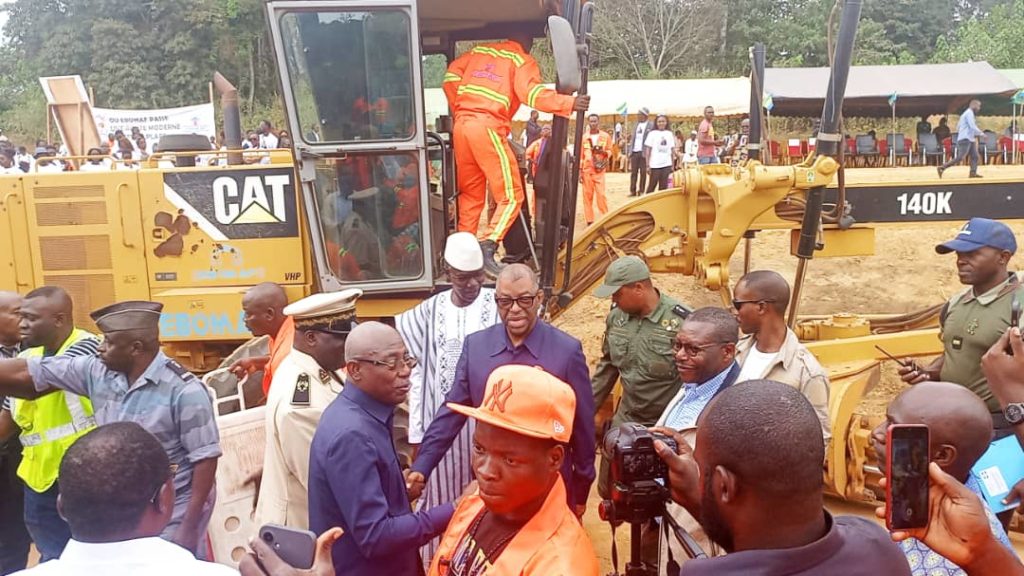
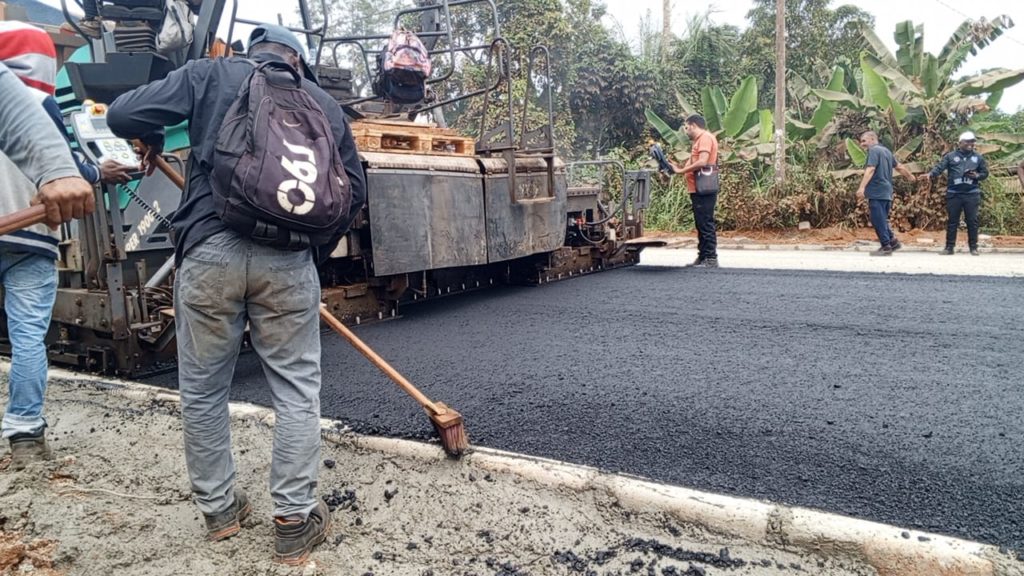
Dapaong-Kompienga transfer: The Canton of Ponio awaits its modern way
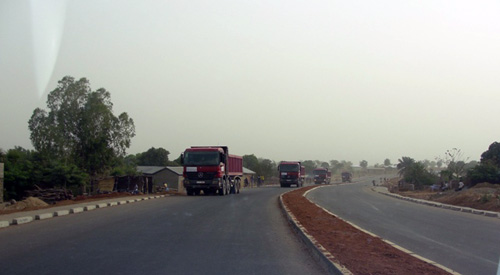
It is undeniable that the Dapaong-Ponio-Frontière route of Burkina Faso is crucial for internal mobility in the Savanes region and transnational traffic with particularly Burkina Faso, Niger or northern Benin. Located less than five hundred (500) metres from the border with the country of the "Integral Humans", Ponio expects large spillovers from cross-border traffic, all the more so since in the Burkinabe part, bitumen is already spreading without abundant traffic. Until the modern road reaches them, it already serves as a springboard for development.
The inhabitants of the canton of Ponio are impatient to see the completion of the road linking Dapaong to the border of Burkina Faso. Already arrived at about ten of them, the laying of the bilayer had its impact on this locality, which houses the last gendarmerie post in Togo in its far north-east part and soon police, customs. The completion of the remediation works has channeled all the valid arms of this local entity. Dozens of young people are at the service of the taskmen who are committed to the birds and the dalots. "I am relieved of my disappointment through this work. I can now buy some things from my own pocket. The fallout of the road is already palpable," says Yves Tchimba, a young employee of a tasker.
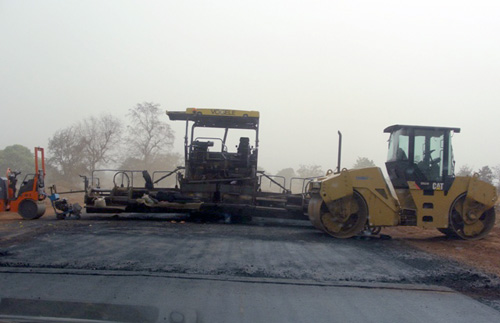 The town of Ponio has 1,250 kilometres of sewage and storm drainage systems on both sides of the section. These ancillary works are home to jobs and local wealth. A wide range of income-generating activities was created around these developments. Restaurateurs and other small retailers take advantage of workers' pay to do good business. "The goods are now buying more than before. There are many people because of the presence of workers. They eat, sleep and dress on the spot. This augurs a good future for Ponio," says Fatimata Salimatou, in front of her chinery stall.
The construction of sanitation works is in full swing. Between the incessant ballet of the toupies consigning the concrete and the trowels or the clamps of masons or scrapers, the eyes of the inhabitants of Ponio balance between the PK 23 where the laying of the bilayer was temporarily interrupted and the bridge whose foundation of the piles accelerates. The combination of these two activities is followed with interest as it will mark the junction of Ponio with this road transshipment.
The locality already has its ambition to grow into a flourishing shopping centre, marking its growth on the back of cross-border trade. "We're very pleased with this road's bitumen. It will allow us to easily reach our Burkinabe brothers across the border. With the construction of the border bridge, the large river that hindered our movements will only be an old memory. Today, we feel relieved by our long-expressed expectations of disenclaving," says Sanaga Nabiga, a Ponio resident.
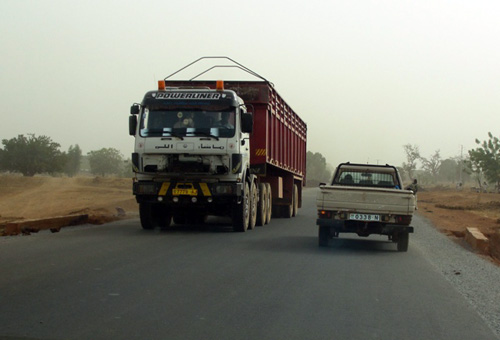 With the effective opening of the section, he expects a heavy traffic whose locality will identify itself as the prosperous crossroads and especially a massive arrival of traders to Ponio. Sanaga Nabiga does not lose a single opportunity to note that work will significantly reduce unemployment in her canton. As evidence, while highlighting future entrepreneurial opportunities, he mentions the current absorption of a significant number of jobless workers in the activities of the taskmen. "Many young people were successful on the site.
Remuneration will allow them to better prepare for rural work," he says. The hopeful resident of Ponio continues to praise the good cohabitation and cordial understanding between EBOMAF workers and his fellow citizens. The attainment of the Ponio terminus by bilayer is only a matter of days. Already, the forty-two (42) piles of its bridge begin to come out of the river bed. As a result of this embellishment, freight forwarders flock to the locality to position themselves. The perspective of another Cinkanssé on the horizon attracts all sectors of activity.
IE
Commentaires (0)
Laisser un commentaire
Vous devez être connecté pour commenter
Articles récents
A Field Mission of the Governor of the Estuary on Compensation for Affected Populations
Lire l'article →