Civil engineering training: 2IE students discover the site of the RN 14
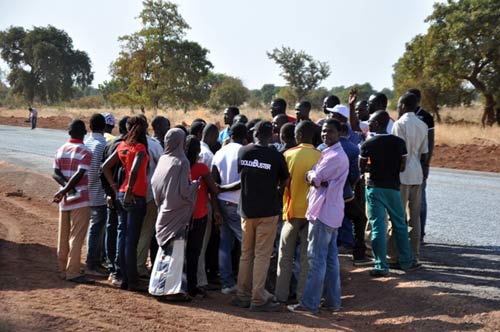
The projects carried out by EBOMAS appear to be real cases of concrete schools for students in civil engineering. Driven by two of their trainers, learners in the year of their license at the International Institute of Water and Environment (2IE) in Ouagadougou went on Saturday 15 December to compare their theoretical knowledge of class with the realities of the terrain on the Koudougou-Dédougou road site. In view of the quality of its human resources and the performance of its equipment stock, the work carried out by EBOMAF is an extension in the training of students and students enrolled in civil engineering courses in schools, institutes and universities.
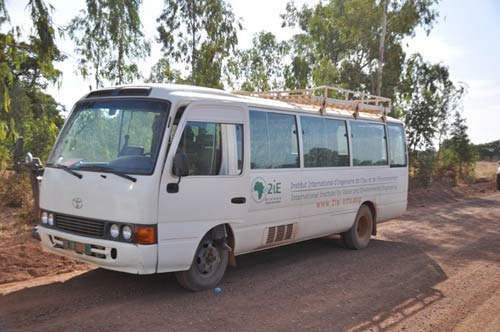 Whether in Burkina Faso or elsewhere in the sub-region, their exits are regular on the various roadworks, each of which is a specific construction market. After being introduced to the B A BA of the BTP in class and to the laboratory of their institution, about 40 students from the International Institute of Water and Environment (2IE) in Ouagadougou spent on Saturday 15 December a study day on the National Road 14 (Koudougou-Dédougou) which has already been the subject of a report for obtaining the BTS at the Burkinabe School of Building and Public Works (EBBTP). Together with several nationalities, these learners have once again enriched their knowledge with the field explanations of their accompanying trainers, Augustin Agbévidé Koffi Kokolé and Marc Combéré, to whom Mohamed Bangoura, the principal conductor of the work, joined.
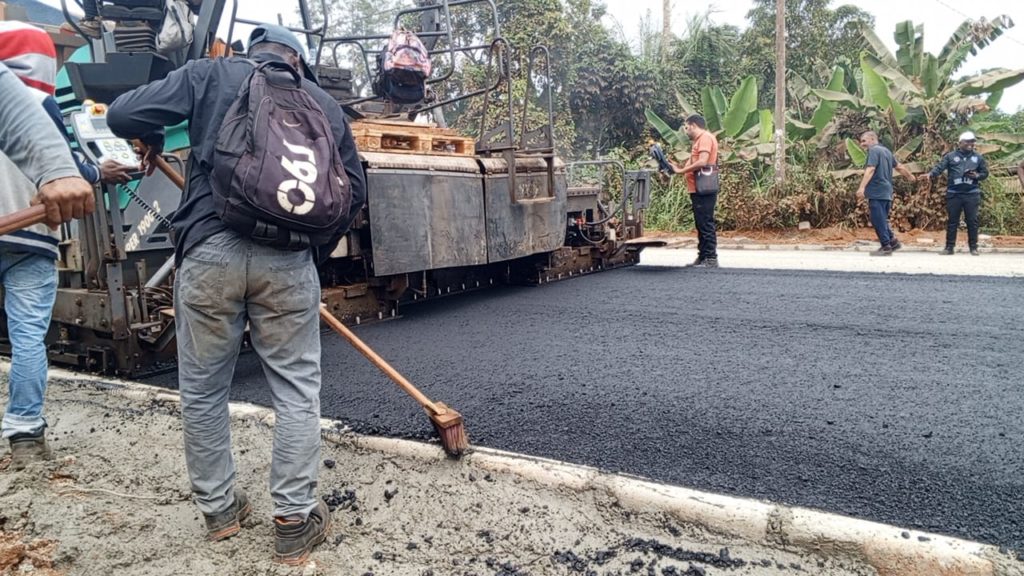
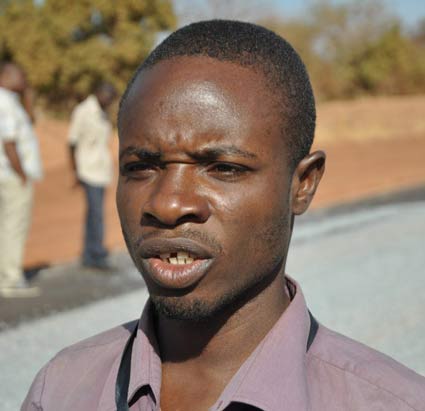 It is in a very interested atmosphere that the future senior technicians and civil engineering engineers reviewed the road project throughout its one hundred and thirty (130) kilometres. They discovered the bilayer construction model in all its dimensions. "Without these types of field trips, what we learn in class would be incomplete or insufficient. A project like this focuses on several human, material and technical realities. It offers a privileged opportunity for teachers and their students to better refine the course taught theoretically and to see the laboratory experiments," says one learner. Arriving at a low-rise construction site, 2IE's knowledgeable visitors were documented on the track covering process that is just a few blocks away from the bridge over the Mouhoun River, a complete realization of eighty (80) kilometres. Very attentive, they inquired about the aspects of "Terraining, impregnation, hanging layer, gravillage" which constitute the bitumen of the Koudougou-Dédougou road.
"This project mobilises a significant part of EBOMAF's human, material and technical capabilities. Everywhere the company carries out work, it gives proof of the same know-how and expertise," says Mohamed Bangoura, Senior Work Controller.
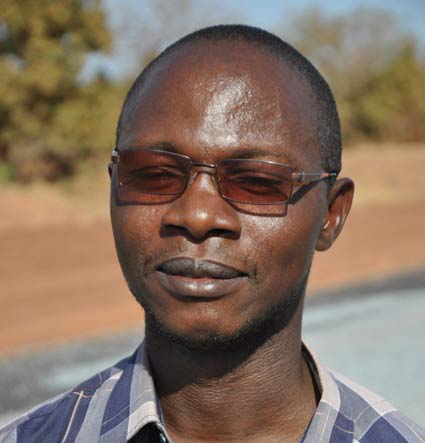 The works of art and sanitation, as well as the signalling and role of each machine, were not obscured. In the eyes of the accompanying teachers, this exit is a necessity and the construction of RN 14, a model of good execution to refine the knowledge of students.
"The training provided to 2IE, which is a continental reference institute, would be of no use if it were based solely on theory. The site visits put learners in a real situation of work. They are all the more essential as the BTP is in the field of practice," stresses Augustin Agbévidé Koffi Kokolé, one of the accompanying trainers, Head of the Civil Engineering Sols Laboratory at 2IE. Students and their teachers hope for a lasting partnership between EBOMAF and their institute in order to sustain this link between theory and practice.
AB/JE
Commentaires (0)
Laisser un commentaire
Vous devez être connecté pour commenter
Articles récents
A Field Mission of the Governor of the Estuary on Compensation for Affected Populations
Lire l'article →