Moussa Sankara, ZACA Project DG:
The implementation of the Commercial and Administrative Activity Area (ZACA) is beginning its decisive phase: building construction. The endless blows of cranks on the site revived the debate about this ambitious urban project. The project director-general, Moussa Sankara, sheds light here on the level of execution and the progress already made in the process of the actual establishment of the buildings.
Sidwaya (S.): Isn't the ZACA project today behind schedule?
Moussa Sankara (MS): Yes and no. Yes, because in 2001 when the government decided to create the extension project, it was thought that after three years, the land would be available and that in five years, constructions would be seen as foreseen in the specifications. But to date, this is not the case. We're still in the service phase. This delay is at the level of the first tranche which consists of the subdivision of the area i.e. the site development.
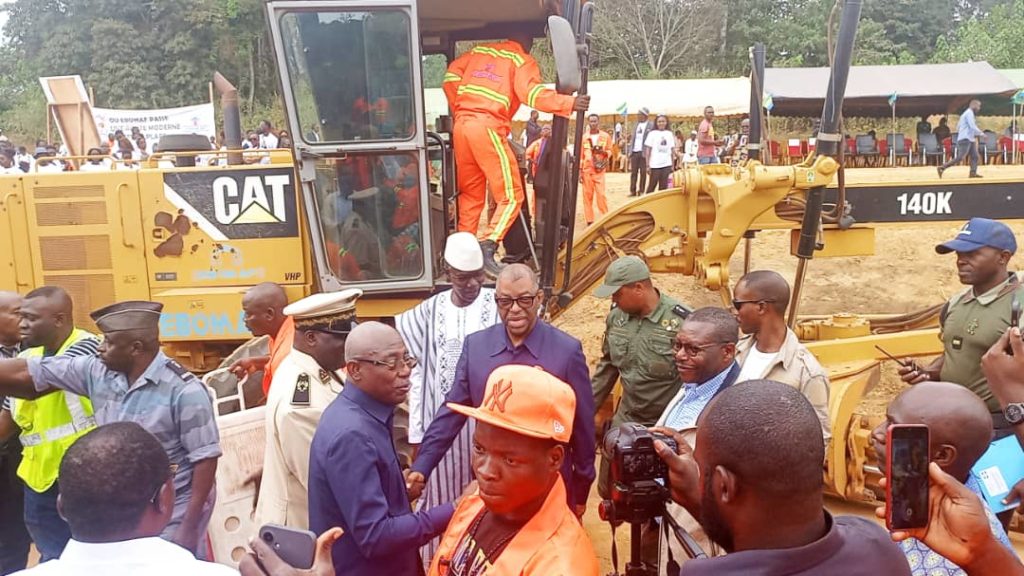
At this level, there were difficulties and a two-year delay in raising awareness to convince local residents to accept the project and choose to leave. No, because in the current phase of development of the project, it can be said that the deadlines are met with the start of road works in February 2007. The company Bonkoungou Mahamadou et Fils (EBOMAF) executes them according to the timing set. Indeed, the initial road market without bitumen foresees a period of 16 months outside the rainy season. Today, by counting between suspensions, extensions, purges, treatment of critical points, everything is moving forward at this point normally on the ground. The temporary receipt of the road on land is under way at the end of the contractual deadlines.
S. : How long would it take to see constructions coming out of the ground?
M.S.: A significant part of the project involving the marketing of parcels should not be overlooked. This part is slowing down slightly. 225 plots out of 260 were sold. But the recovery rate is only 45%. However, a developer who has reached 80% of his subscription can start building his building. Some 50 people who had already cleared the amount of the plots filed their construction plans with the project management for amendment. These can undertake their realization because the specifications provide that five years after the allocation of the plot either the developer is building his building or he has finished.
S. : Does not the cost of the plots hinder the commitment or enthusiasm of the promoters?
M.S.: The price per square metre (m2) is CFAF 103,000, including all taxes (VAT). For the Lambda citizen, this may seem exorbitant. But those who dared to subscribe to this project have made good deals. They first acquired land that was not sold. It is at enormous costs that the State has compensated the residents of the area in order to dispose of the land for sale with all amenities. The ZACA parcels are the best placed and most convenient in the country. In fact, they should be sold at CFAF 185,000 per square metre in order to comply with the realities of the investment costs incurred by the State. But the government does make a good investment, if the promoters drag on, the project will trample. The reluctance of proponents partly explains the delay observed so far. Some people are waiting to see the bumpy streets before they start building them. Now they can do it because inflation is galloping.
S. : The multiplication of real estate projects both in Ouagadougou and in Bobo-Dioulasso does not blow the promoters since they are the same subscribers?
M.S.: It is true that the country has experienced a real estate effervescence in recent years. Several projects have been launched: Ouagadougou 2000, expansion of various activity areas (ZADs) in Ouagadougou, Bobo-Dioulasso, Bobo 2010, etc. These are legitimate and normal projects because they give a variety of choices to promoters. ZACA differs from other projects in its specificity. The area has a real mix because construction can be devoted to services, trade or housing, while other projects do not. The promoters will eventually convince themselves of the advantages of the ZACA which is an ideal framework for business because of its centrality, the modernity of the various buried networks and the presence of the collective accompaniment facilities. However, there is a concern that developers will disperse their energies by purchasing land for speculation rather than focusing on construction activities. Non-development is now a sufficient reason to withdraw plots.
S: What steps could the government take to encourage developers to accelerate building construction in the area?
M.S.: The government is aware that once the parcels are paid and acquired, real estate achievements will require considerable financial effort. Given the current crisis, it is up to the state to take incentives to support the private sector. As such, the Ministry of Habitat and Urbanism and the project's implementation unit have considered a financial, communication and marketing strategy that is State-wide in order to enable the developers to carry out their constructions within the deadlines laid down in the terms of reference, which is to actually build five years after the purchase of the plot.
As construction materials are generally imported, they come back expensive in Burkina Faso. Like some countries that have carried out similar operations, it has been suggested to the authorities to detaxe materials in order to allow developers to build on time at affordable costs. This exemption may be limited to two or three years to avoid speculation. Through the development of the plots, the ZACA project is in its decisive phase of implementation itself. A strong signal from the highest authorities will boost all the actors involved in its implementation. Tax incentives would contribute to the accelerated implementation of the zone within three years.
Bank support will be sought. Financial institutions have their conditions to take into account. Because investing huge sums on a plot requires guarantees that could be based on the final acquisition of the land. For example, at the state level, a special land title window is possible for customers who have sold their subscribers so that they can use bank loans to finance their construction.
S.: How do you respond to rumours that the water table in the area is very flooded to the point that it is impossible to build buildings of a certain standing?
M.S.: My predecessor has already answered this rather recurring question. This rumor is unfounded. There is no place on earth where there is no groundwater. Without her, there's no water, so no life. The National Building and Public Works Laboratory (NLBTP) conducted soil surveys before soil work began. The specifications include three to seven-storey buildings. If so far there are no contrary provisions, this means that the land can support high-rise buildings. One of the fundamental elements of the application for building authorization is the preliminary study of the soil and foundation.
No records revealed the excessive presence of water in the soil to the point of obstructing any construction. To convince yourself, all you have to do is look at the buildings on both sides of Kwamé N-Krumah Avenue.Buildings like BICIA-B are in the basement. So the debate on the groundwater does not sit. The LNBTP is here to cut this rumor short. Because it is this structure that indicates the procedure for establishing foundations regardless of the situation.
S.: What is the category of subscribers? Do we notice a massive diaspora membership?
M.S.: ZACA subscribers are mainly Burkinabe. It is traders and other economic operators who have the courage and the will to support the state in its drive to build a modern future-oriented capital. There are also companies and institutions that do not yet have headquarters or want to expand their premises. The area also houses large plots for social and cultural facilities, for which private partners are expected to contribute. The promoters come from all regions of the country. The diaspora is also interested. The Directorate-General has just discussed a draft convention for the purchase of land of CFAF 1 billion with a compatriot living in Gabon. The development plan established a minimum plot of 500 m2 to approximately 4000 m2 maximum. It is then necessary to pay CFAF 51,500,000 for the smallest land.
S: Is there a deadline to get developers to start their construction?
M.S.: Subscribers don't have to wait until the end of the roadway bitumen which has already begun before starting their work. They can do so at the end of the remediation work once the hoses are covered. Many of the land is currently accessible from avenues such as Houari-Boumedienne. Ideally, promoters would already be able to build from earth tracks. This would avoid the early degradation of bitumen. However, any subscription is subject to strict adherence to the specifications. The promoters take enough time to mobilize financial resources, knowing that a substantial construction budget must be established to avoid any interruption of construction. The suspensions and the resumptions of construction projects create other costs. For example, a plot of 500 m2 must receive an investment of 200 to 250 million CFA francs.
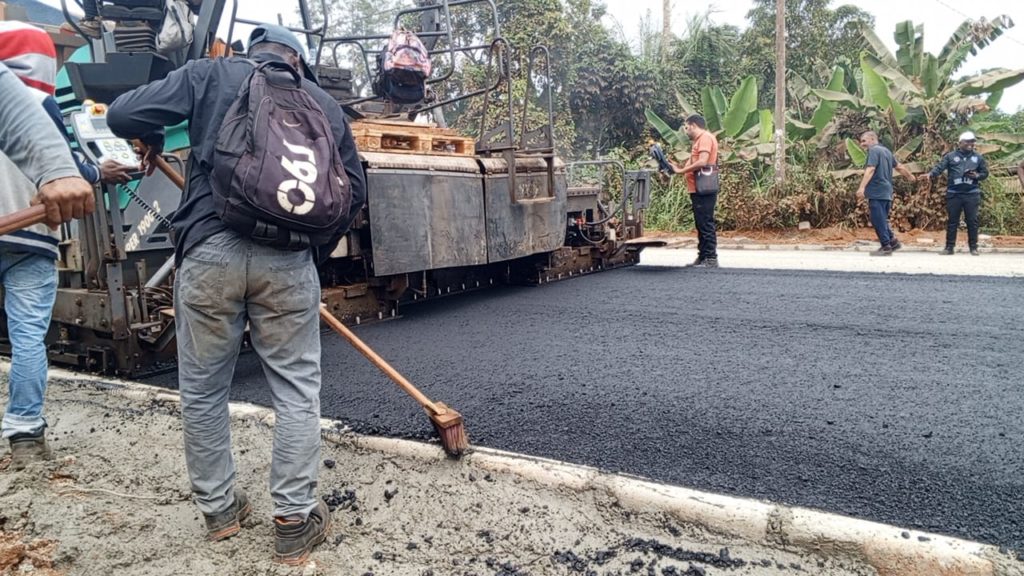
The Council of Ministers entrusted EBOMAF with the market for arterial bitumenage. The avenues of the Mosque and Yennenga already are. The deadline for completion is five months from the start of the work. This will undoubtedly motivate the promoters to invest more. Currently, the rate of construction of land roads is between 80 and 85 per cent. There are six-metre layouts, parking lots and cobblestone sidewalks with a construction level of 80%. The implementation of ZACA is accompanied by concessionaires.
SONABEL, ONEA and ONATEL have already launched their tenders for approximately CFAF 8 billion. The area then gradually transforms into a large construction site. By the end of the year, all road works and miscellaneous networks (VRDs) estimated at CFAF 29.4 billion will be completed with the street covering started in early March. The cobblestones are already made in the workshops. The formal launch of the building construction phase is scheduled for mid-2009. The area will be a real building site in 2010.
S.: What is the fate of the old buildings in the area?
M.S.: Postings do not change at the Kwamé N-Krumah Avenue. However, there are three subdivisions on the extension zone itself. The main part reserved for trade located on the west side of Kwamé-N的Krumah Avenue, a tertiary area that runs along 17 May Resistance Avenue (the airport road) and in the middle, a mixed area. The idea of development developed in the specifications was revisited and enriched by the Minister of Urbanism and Habitat, Vincent Dabilgou. The design of the area has the peculiarity of breaking with neighborhoods such as the Plateau in Abidjan, Ivory Coast, where as soon as the offices are closed, it is a ghost zone that is born.
The development plan focused on a permanent life on the site. As long as an old building is not struck by recoil and height provisions, the building will remain such. The specifications give the ZACA a high architectural quality. All facades must be renovated so that there is a better and pleasant visibility, a perfect symbiosis. Also, already existing buildings will be restored or will have facilities for more height when they do not reach what is stated in the specifications. The aim is to establish a perfect collaboration so that there is a consultation on regulatory issues between the project office and the residents, whether they are in the extension area or the restoration area (cited in An IV B, SOCOGIB and SONAR Airport).
S. : Is a revision of the specifications possible to remove concerns about the limitations of the surface and the height of construction?
M.S.: ZACA was designed to address downtown congestion. It is the result of a diagnosis of the existing state of the city centre, which has been urbanised without taking account of demographic changes and traffic. The project corrects the questions of parking, traffic by providing for a retreat of the buildings. This is a wise option and the promoters will convince themselves. As for the limitation of the height, the remark to leave the free choice to each promoter is now relevant. Given the limited surface area, high-rise construction could fill the spatial limitation. It will thus break with horizontal constructions.
Height construction can be an alternative to the optimal and efficient use of land acquired at a price of gold. However, the objectivity of the height limitation is at the expense of the designers of the cell of charges. Opinions are divided on this. Each party (conceptors or subscribers) has its reasons. Views would benefit from being reconciled for the happiness of the project.
S. : You have sometimes spoken of a construction plan that every subscriber must deposit before opening his site. If so, what are the models next to the area?
M.S.: The models reflect the overall image of the AACZ after its execution. They give an idea of the quality of the planned achievements. These are perspectives in public social and cultural facilities such as the cultural complex, the three-star hotel, the Zangouetin shopping centre, the portal buildings, the landscaped parking of the official camp, etc. They were initiated by the state. Land is available. Only the technical and financial partners remain to support their construction. This category of buildings covers parcels of more than 6,000 m2 reserved already with preliminary summary projects represented by the models. The plots of 500 m2 to 4000 m2 are intended for sale.
Private promoters are free of their plans and projects as long as they comply with the specifications: 5m recoil, 3 to 7 floors high. To do this, subscribers must work with their approved architectures and engineers to get out of buildings that are strong, secure, comfortable and beautiful to enhance the city's image.
S. : What assurance do you give to the inhabitants of Ouagadougou who are simmering about seeing the ZACA finally come true?
M.S.: We must constantly encourage all those who joined the project by buying a parcel. Those who made their subscriptions allowed the State to repay the debts incurred for investments already made on the ground. The other developers must do the same to better support this ambitious government real estate project. ZACA is not a commercial transaction through which the state seeks profits. The development and progress of the project therefore depend on the payment of subscriptions. Proponents who drag the steps will therefore be notified of the withdrawal or resizing of their plot. The ZACA aims to build a functional city.
This ambition will take the necessary time for any long-term project, but it will be carried out in order to solve the problems of services, housing, parking and commerce in the city of Ouagadougou. The state plays its partition by using the area for about 50 billion CFAF (indemnifications, VRD works...). He is always listening to promoters to accompany them, motivate them more. To this day the ball is in the camp of the buyers of plots. They are invited to prepare for construction in order to enhance the area. To do so, their draft plans are expected for validation. By 2014, there will be a real sense of project effectiveness and social and economic impact.
Interview by Jolivet Emmaus (joliv et@yahoo.fr)
In Sidwaya Wednesday April 1, 2009
Commentaires (0)
Laisser un commentaire
Vous devez être connecté pour commenter
Articles récents
A Field Mission of the Governor of the Estuary on Compensation for Affected Populations
Lire l'article →