ZACA project: Branch around an urban island
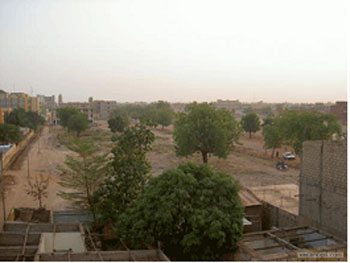
Since February 2007, the development of the "Zaca d'activités commerciales et administratifs" (Zaca d'activités commerciales et administratifs) has been undergoing a certain evolution with roadworks and various networks. An urban island is taking shape in the heart of Ouagadougou, the capital of Burkina Faso. Even if subscribers are slow to execute to raise their buildings.
The truncation of "Yennenga and Mosque" avenues these days marks a decisive turning point in the development of the "Area of Commercial and Administrative Activities" (ZACA). Launched in 2001, the implementation of this project, which was presented as one of the largest and most ambitious urbanisation investments in the Burkina Faso capital, had initially been an object of supputation, scepticism and doubt.
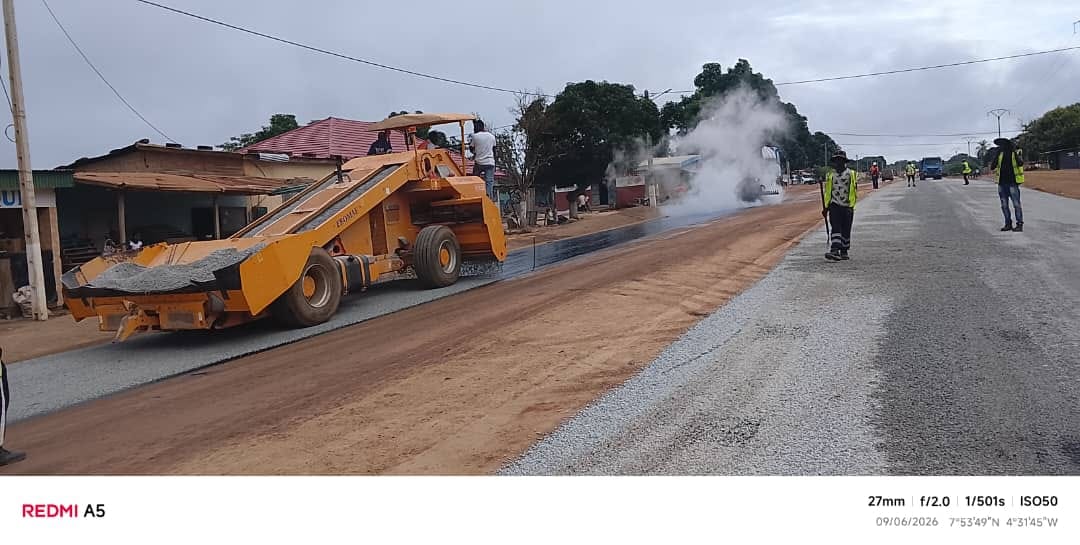
" When the government decided in 2001 to create the extension project, it was thought that after three years the land would be available and that in five years, constructions would be seen as foreseen in the specifications. But so far, this is not the case," admits Moussa Sankara, managing director of the ZACA project. Despite this apparent delay, the development of the area seems to follow its small roadman. The process even took an accelerator in February 2007 with the allocation of the work of service building and then of bitumen to the "Entreprise Bonkoungou Mahamadou et fils" (EBOMAF).
Since that time, the continued twisting of heavy public works machinery in the area has generated renewed interest in the project. Covered hoses and other sewage pipes have come to convince more than one. "It can be said that everything is moving normally right now on the ground. The temporary reception of the road on land is currently under way at the end of the contractual deadlines," says Sankara. Works by Roads and Various Networks (VRD) are currently in their second phase. They cover general earthworks, pavements, sanitation, reservations for various networks, the end of which is planned for April 2009 and the pavement, the signalling, for July 2009.
The costs of these two projects are estimated at CFAF 12.2 billion and CFAF 5.4 billion respectively. "We have qualified human personnel, modern material and technical means to carry out the work properly within the required time," reassures Jean-Claude Roche, technical director and works of EBOMAF. ZACA aims to partially refurbish the road in the centre of Ouagadougou by improving traffic flow and addressing the parking problem. To these objectives join those of meeting the challenges of services, housing and shops that the city of Ouagadougou has faced over the years with its galloping demographics. "ZACA project is the restructuring of a city district nestled between the historic city centre and the international airport.
It is a large 85-hectare urban and real estate site, with about 50 streets and 24 kilometres of roads," says Jean-Claude Roche. "ZACA has the only ambition to offer the capital the face of a modern and functional city," says Moussa Sankara, Project DG. As the works are carried out in the city centre, their execution is hampered by traffic. EBOMAF officials explain that the operation of the yards takes into account the mobility needs of users.
The company even interrupted its interventions on street 17 along the airport so as not to cut the entrance to the city centre. It provides for the rapid development of two to three North-South routes to divert users. "It is imperative to integrate the problem of traffic disturbance into the work. Some of the users are travelling on non-protractable tracks. This often prevents progress, but we don't have too much choice," says Jean-Claude Roche, technical director and work manager of EBOMAF. In addition to these inconveniences inherent in the location of the area, there are related works. Some of the VRD phases depend on the intervention of three concessionaires: the National Telecommunications Office (ONATEL), the National Water and Sanitation Office (ONEA), the National Electricity Corporation of Burkina Faso (SONABEL).
A breakthrough without a push
Construction of underground utilities is estimated at CFAF 8 billion. "The three public service companies have already launched their tenders. The ZACA has a real cruising speed in its execution and evolution," said Epelé Bayoulou, ZACA Project Technical Service Manager. Investments made since February 2007 in the area contribute to the recognition that "ZACA is well underway". Five years after the disbandment of the inhabitants of the various districts concerned, this space now breaks with its grim appearance.
The construction of the canals, the layout of the arteries and the bitumening of certain avenues gradually forge a serviced area to undertake real estate projects. But this notable development in the development work appears to be in phase with the degree of adhesion of the subscribers. 225 out of 260 plots have been sold to date, but the rate of underwriting recovery is only 45%.
In the face of this relatively low level at such a decisive stage, the project management does not exclude the option of removing the parcels from the prospective subscribers in order to satisfy the new demands which pile up. At the headquarters of the Project, questions were raised about the mistrust or reluctance of promoters. "Subscribers don't have to wait until the tracks are truncated before starting their work. They can start now, as long as the remediation work is complete and the channels covered. Many grounds are currently accessible from avenues such as Houari Boumédienne. It would be ideal if the promoters could already build from the dirt roads," says Moussa Sankara, ZACA Project DG.
He invites any developer who has paid 80% of his subscription to start building his building. All building permits are subject to prior deposit with ZACA Project Branch of a construction plan designed by an architect. The cost per square metre (m2) in the area is set at CFAF 103 000 and the areas of the plots range from a minimum of 500 m2 to a maximum of 4000 m2. It is then necessary to pay CFAF 51.5 million to acquire the smallest plot on which to invest between CFAF 200 million and CFAF 250 million. Every building must also have a height of 3 to 7 floors.
All these requirements seem to calm down the ardour of the promoters especially as the ZACA is carried out at the same time as other real estate projects such as Ouaga 2000, Bobo 2010... "The plots should be sold to 185 000 CFA francs per square metre in order to comply with the realities of the investment charges of the order of 50 billion CFA francs granted by the State (indemnification, VRD works...). The project has no commercial purpose. Although the government is making a good investment, if the promoters drag on, the project is going to trample," said Sankara. It sweeps away rumours of an alleged flooding of the water table in the area preventing any construction in height. "One of the fundamental elements of the building permit application is the preliminary study of the soil and foundations.
No record has so far revealed the excessive presence of water in the ground to the point of obstructing any construction," he replied. Although many economic operators who have subscribed to the project are still reluctant to take their hand, it is undeniable, however, that the area has a real interest in the business community. Some call for only accompanying and incentive measures to get started. For El Hadj Hamidou Ouédraogo dit Hamid-Carreaux, CEO of "Centre commercial Patarbyandé" (CCPA), resident and subscriber, the ZACA project must be a source of pride for all Burkinabe. It presents real estate and urban planning as one of the first windows of a country.
"When you arrive in a country, the first point is about the roads, the buildings, before you look at whether people eat well. But for this gigantic modern city to come out of land, the state, financial institutions and policyholders must work together to make it easier to mobilize financial resources and supply construction materials at lower cost," he explains. El Hadj Ouedraogo suggests, however, a revision of certain provisions of the specifications in order to allow any promoter the optimal and efficient occupation of his plot, the construction at a height of his choice and the preservation of his old building.
He finds inexplicable the limitations of spatial occupation and height. "For a plot of 500 m2, it is requested to occupy 220 m2, not to exceed 7 floors or for an old construction to backward by 5 m. All these choices must be free to allow those who have the means to build 20 floors to do so on the sole condition that they scrupulously comply with the construction standards," said the CEO of CCAA. A common language of the policyholders and the government is therefore needed to get the ZACA out of land. The Ministry of Habitat and Urbanism is aware that the real and rapid completion of the project (building of buildings) requires enormous funding. Considerations are under way at state level to find appropriate ways and means to avoid any slippage related to the nerve of war among subscribers.
Jolivet Emmaus (jolive et@yahoo.fr)
Jean-Claude Roche, Technical Director of EBOMAF
"The ZACA project mainly concerns the restructuring of a district of the city nestled between the historic city centre and the airport. It is a large project, with an area of 85 hectares with about fifty streets and twenty-four (24) km of roads. The first market, which is currently in the process of completion, covers general earthworks, streets up to the final layer and sanitation (sculpins). It is in fact all that geometrically structures the zone. It is a tile of large avenues, primary roads, secondary roads, levelling on everything that dominates the geometry of the site. The second market which has just been awarded relates to the coating, i.e. the asphalting of the tracks. This is very important because it helps to clear and improve traffic in the city centre. The bitumen of the Mosque Avenue is already over.
We have begun the construction of the arobe layers of one of the main North-South routes of the ZACA, namely Yennenga Avenue, a deep symbol of Burkina Faso. It is an express two-way double track with two small connecting suites that belt the Yennenga garden. On all 24 km of roads including a few pedestrian lanes to be paved, 22 km around are to be bitumen. The deadline is relatively short, but it is appropriate if a part of the project is needed and if the city of Ouagadougou needs it. Since it becomes necessary, in order to avoid congestion, to clear certain main routes. With the equipment and skills at our disposal, the commitments will be fulfilled and all streets will be bitumen shortly. We have everything to do a good job on time. All that remains is the sidewalks and parking to be done after the installation of the water, electricity and telephone networks".
El Hadj Hamidou Ouédraogo dit Hamid-carreaux, CEO of CCAA, resident and subscriber
" The ZACA project is a good thing in that it is real estate and roads that attract the attention of a visitor when he arrives in a country. It is therefore a great pride for Burkina Faso. Building a building in this country is certainly not easy because it is not an investment immediately profitable as under other skies but it is a pleasure for me to undertake in this area. I'm finishing my building. Very good relations with Project officials. Payment is not often easy but they try to understand. I have two plots. The 1 200 m2 of which part, already built, was acquired before the ZACA project. The current development works reassure the proponents on the conduct and progress of the project. However, compliance with the specifications poses two serious problems. First, there is the limitation of land use. For a plot of 500 m2, it is requested to occupy only 280m2. The remaining 220 m2 are not used and finally, we have a small building built while the m2 is very expensive.
It's not profitable. Then there is the limitation of the number of floors. This restriction is not, in my opinion, explained. ZACA is not a residential area but a commercial and administrative area. The one who is able to build on 20 floors or even beyond must be free to engage. The essential thing is that it meets the standards. My first building already built in the area is on eight levels and I am told that it takes a maximum of seven floors. What should I do? The second parcel extends over 500 m2. If its construction delays, this is due to the problem of occupation. I am asked to step back by 5 m when such an option distorts my construction plan. It's a real dilemma for me. It is not interesting to limit the space and height of the building. The project must allow each subscriber the freedom to invest according to his or her means, even if he or she must take all the necessary measures to ensure strict compliance with the real estate regulations.
It is time to focus on high-rise constructions because in a few years, the problem of offices and plots will arise in Ouagadougou. If the specifications can be revised to take these observations into account, this would greatly assist the proponents. Consider registering in the new generation of real estate. The ZACA is an urbanisation issue in which commercial banks must take part alongside the subscribers, by financing the constructions with land titles and the state as a guarantee by granting exemptions on the materials as well as a deferred on the taxes related to the real estate to allow to repay the loans contracted".
Interview by J.E.
Sidwaya
Commentaires (0)
Laisser un commentaire
Vous devez être connecté pour commenter
Articles récents